How SNAP really works
Seven things that catch people out. None of it is secret, but nobody tells you at the counter, and most of it is worth money.
If you read only one section, read the second.
It is arithmetic, not a judgement about you
Nobody decides whether you deserve help. There is a formula, and it is the same for everybody.
take off a standard deduction everyone gets
take off your medical costs, if anyone is 60+ or disabled
take off part of your rent and utilities
what is left is your net income
your benefit is the maximum for your household size, less 30% of that
That is the whole thing. Every figure in it is published. If you know the formula, you can check their answer — and that is all this website does.
If anyone is 60 or older, or disabled, three rules change
This is the big one, and it is where nearly all the missed money is.
Your rent deduction is not capped. Everyone else hits a ceiling. You do not.
You can deduct medical costs. No other household may do this at all.
If you have ever been told you earn too much, and somebody in your home is over 60 or disabled, it is worth asking which test they applied.
Do not send them your electricity bills
Hawaiʻi does not use what you actually pay for utilities. It uses a fixed standard amount.
So the only thing you have to show is that the bill is yours to pay — an account in your name, or a tenancy agreement saying utilities are not included. One bill is plenty. The amount on it makes no difference whatsoever.
People spend weeks gathering bills and working out averages for this. It is wasted effort, and nobody warns them.
“Medical expenses” means far more than premiums
Most households put down their Medicare premium and stop, because a premium is the only medical cost that turns up looking like a bill you are supposed to do something with.
It also counts if you pay for: getting to appointments, including the airfare and hotel when you fly to another island to see a specialist. Co-pays and deductibles. Dentures, glasses, hearing aid batteries. Someone who helps you at home. A walker or a wheelchair. Over-the-counter medicines a doctor told you to take.
Everything above $35 a month, added together, comes off your income. The full list is here.
Tell them the moment a cost goes up. Do not wait.
If your premiums rise, or you start paying for something new, report it straight away — in writing, and keep proof that you sent it.
They must act on it no later than the first payment issued ten days after you report it.
Your notice gives you one number. Check it every time.
This is the Budget Summary from a real Hawaiʻi SNAP notice. Find the same line on yours.
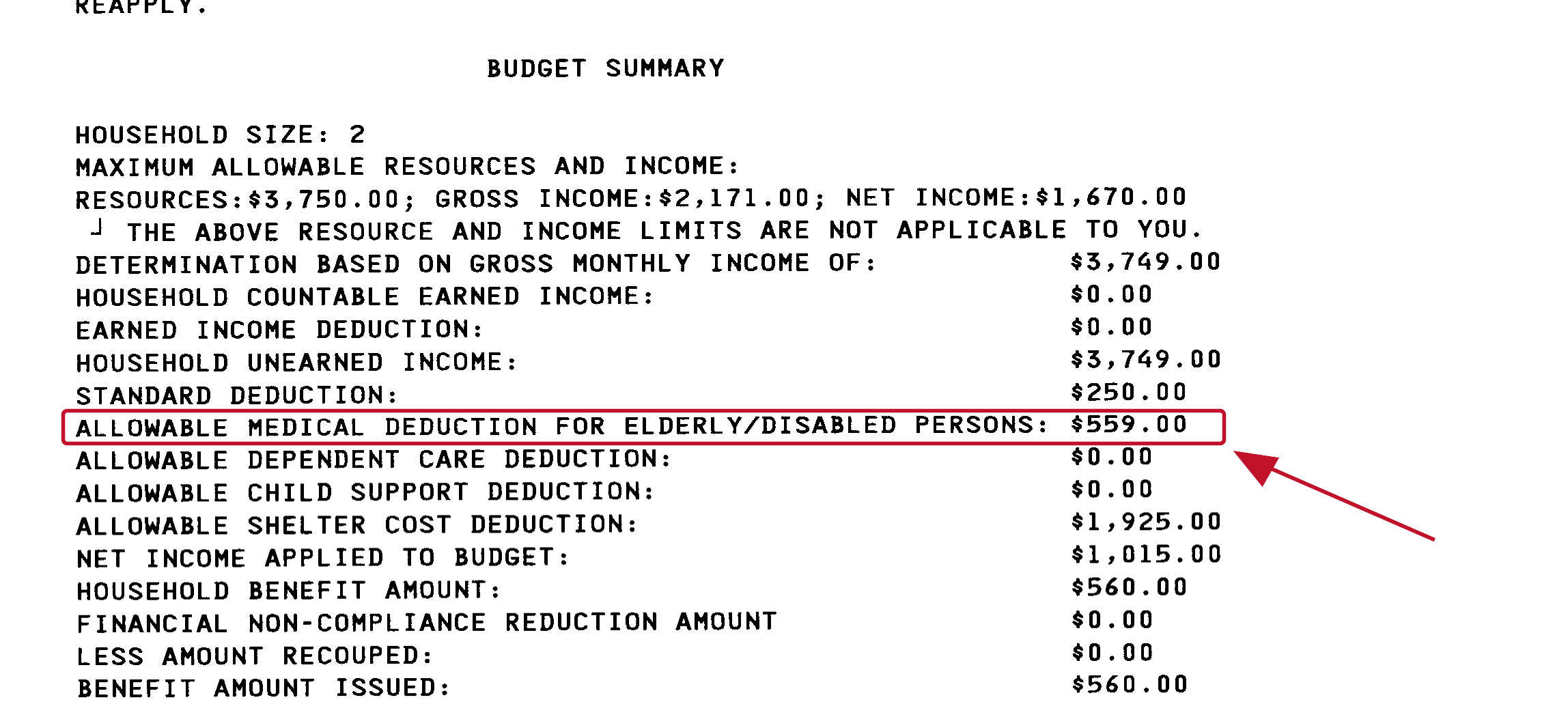
That $559.00 is everything — every premium, every prescription, every journey to a clinic, added up and reduced to a single figure. The notice does not say what went into it, and it does not say what was left out. If something of yours was quietly dropped, there is nothing on the page that would tell you.
Then write, and ask one specific question: which item did you not allow, and why? Not “please explain my benefit” — that gets you the same number back. Ask which line.
And check it every time, not just the first. A figure that was right last year can quietly change without any notice ever saying that it has, or why.
If they get it wrong, fixing it is their job, not yours
If the Department fails to act on something you reported, and you lose money as a result, the rule says they must pay it back to you.
If you disagree with a decision, you can ask for a fair hearing. It costs nothing. Legal Aid Society of Hawaiʻi and your local kūpuna services can help, also free.
Now work out your benefit → See what counts as medical
The rules referred to here are 7 CFR 273.9 (income and deductions), 273.10 (working out the benefit), 273.12 (reporting changes) and 273.17 (restoring lost benefits). This is a plain summary, not legal advice, and only the Department of Human Services can decide your benefit.